Injustice 2
- 4.3
- Rating
- 10.00M
- Installs
- Free
- Price

 Analysis by App-foxy
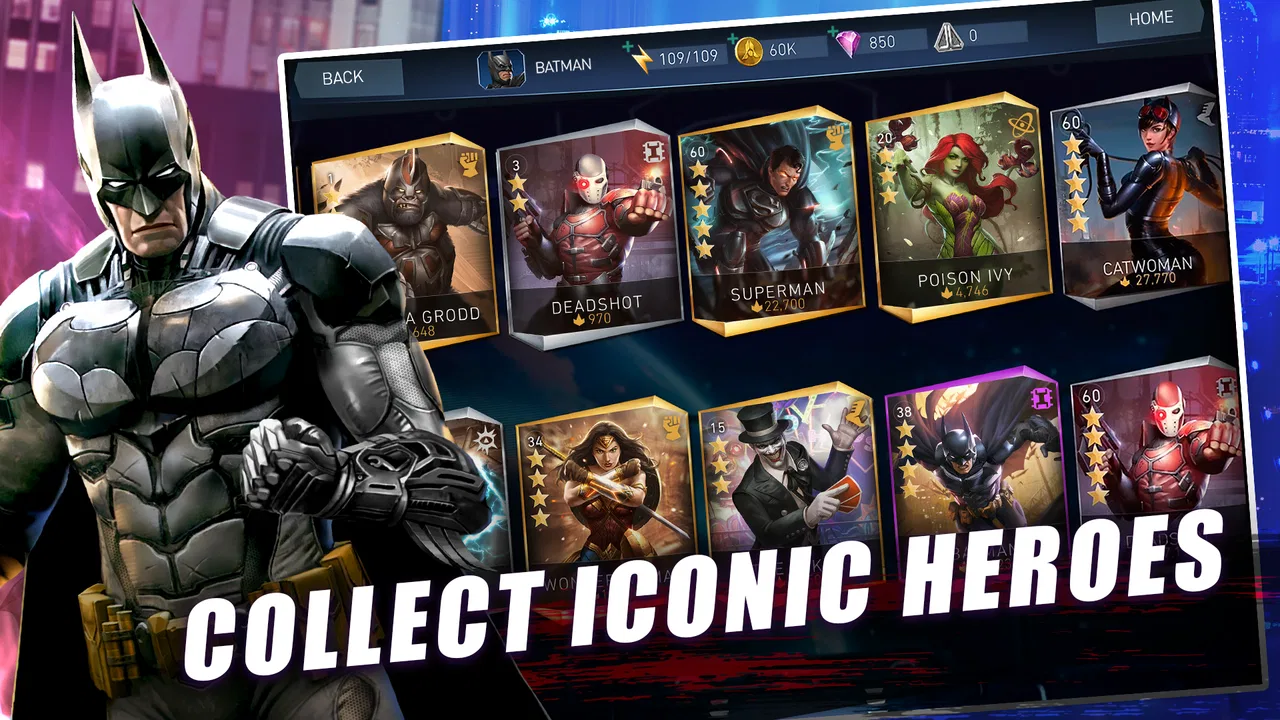
I spent time with Injustice 2 as a mobile action fighting game, and my first impression was that it aims for more than quick button tapping. It combines recognizable DC heroes and villains with collectible-team progression, short battles, and a steady stream of upgrades. That makes it easy to pick up for a few minutes, but it also means the game asks you to think about which characters to improve, which battles are worth attempting, and when to stop spending resources.
The game is free to download, which makes trying it straightforward. It comes from Warner Bros. International Enterprises and is rated Teen, so it is aimed at an older audience rather than young children. I would describe it as a good fit for someone who enjoys comic-book characters, mobile combat, and long-term collection goals, but not necessarily for a player looking for a pure arcade fighter with every option immediately available.
How the mobile fighting experience works
Injustice 2 presents fights in a way that feels deliberately suited to a touchscreen. Instead of requiring a large set of virtual buttons, the controls let me concentrate on movement, attacks, blocking, and timing. That lower barrier matters on a phone: I can understand the basic rhythm quickly, yet stronger opponents still make careless play obvious.
You May Also Like

 Blood Strike: 2.5 Anniversary
Blood Strike’s Loadouts Turn Every Drop Into a Tactical Gamble
A close look at Blood Strike’s custom loadouts: how fast access to signature weapons reshapes its battle royale rhythm, rewards preparation, and narrows the gap between fights.

 Pandora - Music & Podcasts
Pandora’s Music Is Easy to Start, but Harder to Recover
Pandora’s strength is its low-effort path from a seed to a station. Its weak spot is how much confidence it asks you to place in connection, setup, and quiet recovery.

 8 Ball Pool
 Is Built on Rivalries, Rematches, and Routine
A close look at the rivalries, rematches, shared routines, and unanswered safety questions that turn a quick pool match into a persistent mobile community.

 Samsung Music
’s Quiet Strength Is Playing What You Already Own
Its reach comes less from spectacle than from dependable access to a personal library. That simplicity is both the app’s strongest retention engine and its ceiling.

 AccuWeather: Weather Radar
AccuWeather Review: A Quick, Clear Forecast for Everyday Decisions
For everyday plans, the best forecast is the one you can understand quickly. AccuWeather makes rain timing, radar, and local conditions easy to act on, with a few trade-offs.

 Hill Climb Racing
Why Hill Climb Racing Still Turns Crashes Into One More Run
A tiny car, a bumpy hill and one more upgrade: Hill Climb Racing keeps resurfacing because its simple chaos makes every near-miss feel personal.
More From Our News Desk



The most enjoyable part is learning how to turn a simple exchange into a controlled sequence. I have to decide whether to keep attacking, defend against an incoming hit, or switch the situation with a special move. The best moments do not come from tapping as fast as possible. They come from recognizing an opening and using the right character or ability before the opponent recovers.
That design also makes the game approachable for people who do not usually play traditional fighting games. You do not need to memorize a long arcade-style command list before you can participate. At the same time, experienced players may eventually want more precision than the mobile format provides. The simplified controls are convenient, but they can make some encounters feel more about team strength and progression than pure mechanical mastery.
The DC setting gives the battles a useful sense of identity. Heroes and villains do not feel like anonymous fighters placed into a generic arena. Building a roster around characters I already recognize gives the collection side a reason to matter, and it makes upgrading a favorite character more satisfying than improving an interchangeable unit.
Still, this is not a game I would recommend solely because someone wants a story-driven superhero adventure. The appeal is in repeated battles, improving a roster, and testing combinations over time. If your main interest is watching a long narrative unfold, the fighting and progression loops may feel more prominent than the plot.
Why the roster changes the way I play
One useful detail is that I do not approach every fight with the same team. A character who performs well in one situation may be less useful when the opponent demands a different rhythm. That encourages me to keep more than one fighter in reasonable condition instead of putting every resource into a single favorite.
This creates a practical decision whenever I receive something that can improve the roster. The tempting choice is to strengthen the character I use most, but spreading improvements can make the wider game less frustrating. A balanced collection gives me more answers when a particular matchup or challenge exposes a weakness.
I also found that switching characters is not just a visual flourish. It can interrupt an uncomfortable exchange, preserve a fighter who is close to defeat, or bring in a character whose abilities suit the current moment. Players who treat the team as three separate health bars may miss much of the tactical value. I get better results when I think of the roster as a shared set of tools.
That approach is especially helpful during an everyday session. If I have only a short break, I can complete a few fights without needing to commit to a long play period. If I have more time, I can review the roster, improve equipment or abilities where appropriate, and plan a better team for the next challenge. The same game supports both habits, although the longer-term progression is where most of its depth sits.
Progression is useful, but it can shape the pace
The collection and upgrade systems give each battle a purpose beyond simply winning. A victory can contribute toward making the team stronger, while a defeat tells me that I may need a different approach or more development. That loop is satisfying when progress feels earned through smart decisions.
The trade-off is that progression can become the main answer to difficulty. When a fight feels too demanding, the solution may be to improve the roster rather than refine technique. That is not automatically bad, especially in a free mobile game, but it changes the kind of challenge on offer. Players seeking a tightly balanced competitive fighter may prefer a game where character strength is less connected to time spent developing a collection.
My advice is to avoid upgrading randomly. I get more value by choosing a small core of dependable characters, then keeping a few alternatives ready for situations where the main group struggles. This prevents resources from being scattered across a roster I rarely use and makes each improvement easier to notice.
Another useful habit is to pause after a loss instead of immediately repeating the same attempt. I look at whether I was losing because of poor timing, a weak matchup, or a team that simply needs more development. Those causes require different responses. Repeating a battle without identifying the problem usually turns a manageable obstacle into a frustrating grind.
What the free price really means
Injustice 2 is free to access, so the initial decision is low risk: you can install it and find out whether the combat style suits you without paying an entry fee. That is its clearest value advantage over a paid game. For a player who wants a superhero fighting game to sample during commutes or short breaks, free access is meaningful.
There are in-app purchases ranging from $0.99 to $99.99 per item. I would treat those as optional spending rather than part of the basic recommendation. The important distinction is that the game can be tried without payment, while spending may appeal to people who want to accelerate collection or progression. I would not describe a purchase as necessary for someone who is still deciding whether the core battles are enjoyable.
Because the highest listed purchase is substantial, budget awareness matters. A player can start casually and later feel pressure when a stronger roster would make progress faster. My practical rule is simple: decide in advance whether you are playing only with free access or whether you have a fixed entertainment budget. That keeps a difficult fight from turning into an impulsive purchase.
The value of the free route depends heavily on patience. If you enjoy repeating activities, gradually improving a team, and treating new characters as long-term goals, the no-cost path can provide a lot to explore. If you want immediate access to a complete roster or dislike waiting for progression, the game may feel less generous even before you consider spending.
Where the experience creates friction
The biggest limitation for me is the tension between fighting skill and roster development. Good timing helps, but it cannot always compensate for a team that is underdeveloped. That can be satisfying for collection-focused players and disappointing for someone who expects every victory to depend primarily on execution.
The mobile controls are another compromise. They are much easier to use than a full virtual arcade layout, yet they do not offer the same feeling of precision as a controller or dedicated fighting setup. I appreciate the accessibility, but I would not choose this version as my main fighting game if exact inputs and tournament-style control were my top priorities.
There is also a risk of repetition. Battles are convenient and often enjoyable, but the basic interaction can become familiar after extended sessions. I prefer playing in shorter bursts, using the progression goals to give each session direction. A long, unfocused session can make the repeated combat feel more noticeable.
The Teen rating is worth considering for families. This is not a game I would automatically hand to a young child simply because it features comic-book characters. Parents should check whether the tone, combat presentation, and optional purchase structure fit the player who will use the device.
Device compatibility is relatively broad: the game requires Android 7.0 or later. That makes it accessible to people using older Android hardware, although the experience can still vary depending on the phone. I would leave enough storage and close unnecessary background apps before a serious session, particularly if the device is older or already struggles with demanding games.
Who will get the most from it
I think the strongest audience is someone who enjoys DC characters and wants a fighting game with a reason to keep returning. The collection layer gives battles context, while the action remains simple enough for a quick session. It is also a good choice for players who like improving a team gradually rather than finishing a fixed campaign and moving on.
It works well for a commuter, a student taking a short break, or anyone who wants a game that can be played in small pieces. A typical session might involve checking which character needs attention, completing several fights, and stopping after reaching a small progression goal. That structure is more comfortable for me than trying to play continuously for hours.
Fans who enjoy comparing character roles may also find more value than casual button mashers. The roster encourages experimentation, and choosing a team thoughtfully can make familiar battles feel different. I especially recommend paying attention to which characters cover one another's weaknesses rather than selecting only the most recognizable names.
On the other hand, I would skip it if you want a completely offline-feeling arcade experience, a one-time purchase with no optional spending decisions, or a fighter balanced almost entirely around player execution. I would also hesitate to recommend it to someone who dislikes repeating battles to strengthen a collection. Those preferences point toward a more traditional fighting game or a premium action title.
How it compares with other mobile fighting choices
Compared with a straightforward arcade fighter, Injustice 2 offers more reasons to return after a single match. The roster-building and upgrade focus give it a longer tail, but they also introduce more management and more dependence on progression. A pure arcade alternative may feel cleaner when you want immediate competition, while this game is better when you want your team to develop over time.
Compared with a collectible action game built around automatic battles, the hands-on combat gives me more responsibility during each encounter. That makes a win feel more personal, but it can also make the simplified touchscreen controls feel limiting when I want exact control. The game sits between accessible mobile action and deeper fighting mechanics rather than fully replacing either one.
Its DC identity is another meaningful difference. If you already care about the characters, the roster gives the progression emotional weight. If you do not, the same systems may feel like a familiar collection loop with a superhero skin. In my view, the license strengthens the experience most when it is paired with genuine interest in experimenting with different heroes and villains.
My recommendation after weighing the cost and compromises
For me, Injustice 2 is worth trying because the free entry point lets the combat prove itself before any spending decision. The combination of touchscreen-friendly action, recognizable DC characters, and team development is more substantial than a quick promotional tie-in. Its current version is 6.7.1, and the game has been available since May 11, 2017, which helps explain why it has had time to build a large mobile audience.
Its reception is strong, with a 4.3 average from around 931 thousand ratings and more than 10 million installs. Those figures do not guarantee that its progression style will suit everyone, but they do show that the format has broad appeal. I would still judge it by the kind of player you are: patient collectors and superhero fans are likely to enjoy it more than competitive purists.
My bottom line: try the free version, set a spending boundary, and judge the game by whether its progression feels rewarding rather than necessary. I would recommend it to a friend who wants accessible DC action in short sessions and does not mind developing a roster over time. I would steer a friend elsewhere if they want a controller-focused fighter, a fully paid experience, or a game where every obstacle is solved through technique alone.
Warner Bros. International Enterprises has made a mobile game that is easy to start but more demanding to evaluate fairly. The attractive part is not simply hitting opponents with famous characters; it is learning how to build a team, manage improvements, and choose when a battle deserves another attempt. That is enough to make the free download worthwhile, provided you approach the optional purchases carefully and accept the limits of touchscreen fighting.
FAQs for Injustice 2
01What is Injustice 2, and how does the gameplay work?
Injustice 2 is a superhero fighting game featuring characters from the DC universe, including Batman, Superman, Wonder Woman, The Flash, and many others. Battles use simple touch controls, allowing you to swipe, tap, block, and trigger special abilities. The game also includes story chapters, online multiplayer, challenges, character upgrades, and collectible gear that changes fighters’ appearance and abilities.
02Can I play Injustice 2 without an internet connection?
Some parts of Injustice 2 may be available offline, particularly certain single-player battles, but the game is primarily designed around online services. Features such as multiplayer competition, events, account synchronization, updates, and some rewards generally require an internet connection. Availability can vary by version and platform, so players should not expect the complete experience to work offline.
03Is Injustice 2 free to download, and does it include in-app purchases?
Injustice 2 is generally free to download, but it uses optional in-app purchases. Players can buy premium currency, character packs, upgrade resources, and other items that may speed up progression. You can enjoy the main game without spending money, although unlocking and improving a large roster may take considerable time. Device-level purchase restrictions are recommended for children.
04Does Injustice 2 require a powerful phone or tablet?
Injustice 2 features detailed 3D graphics, cinematic attacks, and large character models, so it can be demanding on older or lower-end devices. A recent Android or iOS device with sufficient storage, memory, and a compatible operating system should provide a smoother experience. Before downloading, check the store listing for current requirements and make sure enough free space is available for updates.
05Does Injustice 2 support multiplayer and progression between devices?
Injustice 2 includes competitive online features where players can test their teams against other users, along with rankings, events, and rewards. Online modes usually require a stable connection and may depend on active game servers. Progress synchronization can depend on the account or platform used, so players should connect the game properly and avoid switching devices without confirming that their save data is backed up.
Pros
- Large roster of DC heroes and villains to collect and upgrade.
- Cinematic battles with impressive graphics and character animations.
- Multiple game modes
- including campaign
- arena
- and multiplayer leagues.
- Simple controls make combat accessible while retaining strategic depth.
- Frequent events provide new challenges and opportunities to earn rewards.
Cons
- Progress can feel slow without spending money on premium currency.
- Requires substantial storage space and may perform poorly on older devices.
- Energy limits can interrupt longer play sessions.
- Online features require a stable internet connection.
- Duplicate character shards and random rewards can be frustrating.

Injustice 2
Gallery